A site-engineer's guide to using LDPE sheet on construction projects — curing, damp-proofing, covering — and picking the right micron thickness for each job.
Table of Contents
Why Construction Sites in Bangalore Rely on LDPE Sheet
Walk through almost any active construction site in Bangalore — from a Whitefield apartment project to a Peenya warehouse build — and you'll find LDPE sheet doing quiet, unglamorous work: covering curing concrete, lining excavated areas, or protecting stacked material from monsoon rain. It's cheap relative to the protection it provides, flexible enough to handle on site without special equipment, and available in enough thickness options to match almost any covering need.
For site engineers and contractors, the practical question isn't whether to use LDPE sheet — it's which micron thickness and colour to specify for each part of the job, since using an unnecessarily heavy sheet wastes budget and using too light a sheet risks tearing mid-project.
Concrete Curing With LDPE Sheet
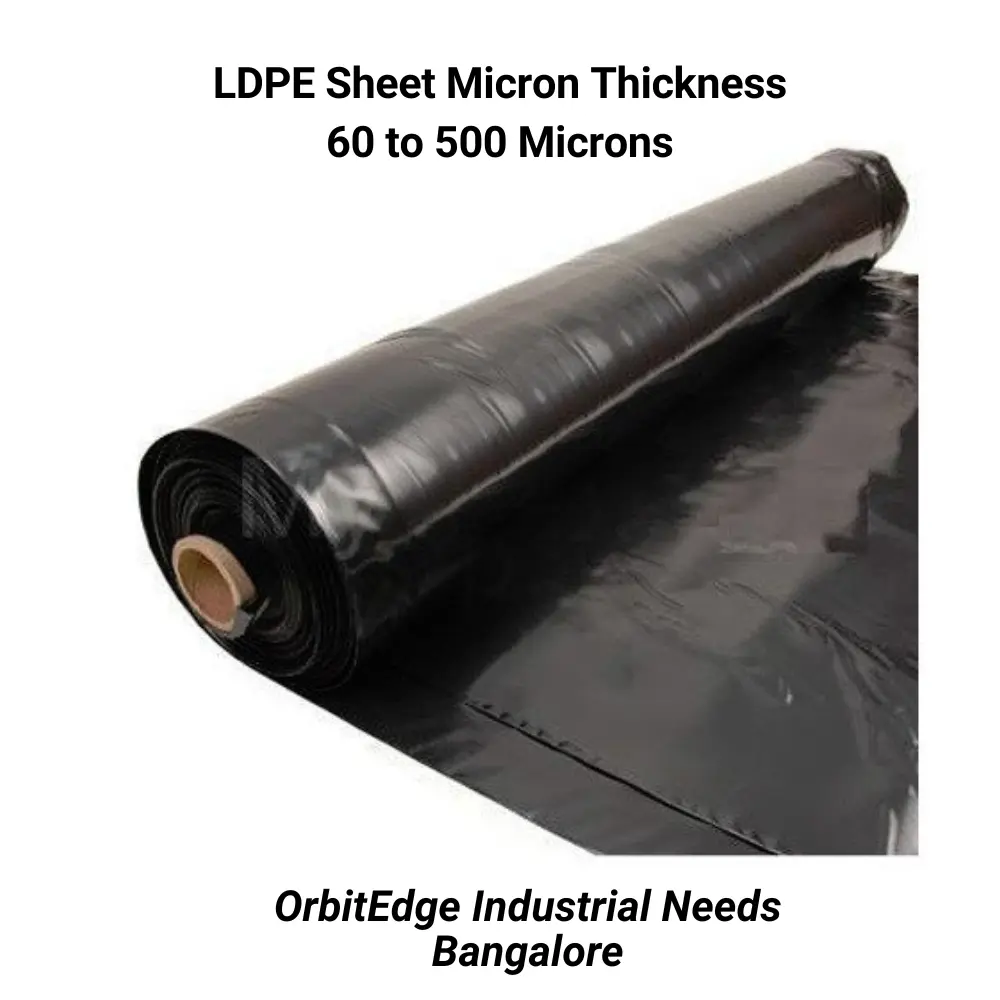
Covering freshly poured concrete with black LDPE sheet is one of the most common curing methods used on Bangalore sites, particularly during the hotter months when uncovered concrete can lose moisture too quickly and cure unevenly, leading to surface cracking. Black sheet is preferred here specifically because it blocks direct sunlight, helping maintain a more consistent curing temperature and moisture level.
200 to 250 micron black LDPE sheet is a common specification for curing cover on slabs and columns, offering enough durability to stay in place across the curing period without tearing from wind or site movement.
Damp-Proofing and Under-Slab Membrane Use
LDPE sheet is also widely used as a damp-proof membrane beneath slabs and in foundation work, acting as a barrier against ground moisture rising into the structure. For this application, contractors typically specify a heavier micron thickness — 250 to 500 micron — since the sheet is under continuous ground contact and needs to resist punctures from aggregate or reinforcement during the pour.
General Site Covering and Material Protection
Beyond curing and damp-proofing, LDPE sheet covers a wide range of general site needs: protecting cement bags and dry material from monsoon rain, covering scaffolding and stored equipment overnight, and lining temporary storage or mixing areas. These lighter-duty applications are usually well served by 60 to 150 micron sheet, where cost efficiency matters more than heavy-duty durability.
Matching Micron Thickness to the Job
A simple way site teams in Bangalore approach this: if the sheet will be walked on, dragged across rough surfaces, or left in continuous ground contact, specify 250 to 500 micron. If it's covering material overnight or during a short weather window, 60 to 150 micron is usually sufficient. For curing applications specifically, 200 to 250 micron black sheet is the most commonly specified range.
Ordering LDPE Sheet for a Live Project
Construction schedules don't leave much room for delayed material, so when ordering LDPE sheet for an active site, it helps to confirm the micron thickness, colour and total roll quantity for the full phase of work upfront, rather than reordering in small batches. This also typically qualifies for better bulk pricing than repeated small orders.
Quick Comparison
| Construction Use | Recommended Micron | Colour |
|---|---|---|
| Concrete curing cover | 200-250 Micron | Black |
| Under-slab damp-proofing | 250-500 Micron | Black |
| Material/equipment covering | 60-150 Micron | Black or Natural |
| Excavation/pond lining | 250-500 Micron | Black |
| Short-term dust protection | 60-100 Micron | Natural |